Modernizing a mainframe changes the system, and with it the controls, documentation, and authorization that auditors and authorizing officials rely on.
Agencies that plan for compliance from the start, instead of after the build, avoid most of the unpleasant surprises. And when it's done well, modernization often leaves an agency in a stronger compliance position than where it started.
This is the fifth post in our mainframe modernization series. Earlier posts cover why COBOL and mainframes are still in use, how to choose an approach, why understanding the system comes first, and how to modernize without disrupting operations.
Why does compliance matter so much in mainframe modernization?
Mainframes usually hold some of an agency's most sensitive, mission-critical data, and they often run under long-standing authorizations. Change the system and you change what that authorization covers.
Legacy platforms are also where compliance tends to be hardest. The Government Accountability Office (GAO) found in its 2025 review of critical legacy systems that seven of the 11 federal systems most in need of modernization have known cybersecurity vulnerabilities that can’t be fully remediated without modernization, and eight can’t implement the federal Zero Trust strategy without it. Agencies manage that risk with compensating measures, such as isolating the system, but those measures are workarounds. Modernization is the chance to retire them, as long as compliance is part of the plan from day one.
Which frameworks and requirements apply?
It depends on the agency and the data, but these come up most often:
FISMA and the NIST Risk Management Framework. The Federal Information Security Modernization Act (FISMA) sets expectations for federal information security programs. NIST's Risk Management Framework (SP 800-37) is the process agencies use to meet them: prepare, categorize, select, implement, assess, authorize, and monitor. The security controls themselves come from NIST SP 800-53. The result is an authorization to operate (ATO), a formal, risk-based decision by a senior official that the system may operate.
Zero Trust. Federal agencies are working toward the goals in OMB Memorandum M-22-09. We cover why legacy systems are the hardest part of that in The Zero Trust Bottleneck: Why Legacy Systems Are the Hardest Pillar to Fix.
FedRAMP. The Federal Risk and Authorization Management Program covers cloud services used by federal agencies. It's in the middle of a significant overhaul in 2026. FedRAMP now uses "certification" as its official label in place of "authorization," and four certification classes (A through D) replace the old impact-level labels. Under FedRAMP's published plan, the former Moderate baseline maps to Class C. Details are still moving, so confirm current requirements at fedramp.gov before you commit to a path.
GovRAMP. State, local, tribal, and education agencies have a parallel program. GovRAMP is the new name for StateRAMP, announced in February 2025. A growing number of governments use it to check the security of cloud vendors.
Data-specific rules. Depending on what the system holds, others may apply, such as HIPAA for health information, CJIS for criminal justice information, or IRS Publication 1075 for federal tax information.
How can modernization put an authorization at risk?
Usually in a few predictable ways:
- A new system means a new boundary. Significant changes to a system generally call for a fresh look at its authorization, and the agency's authorizing official decides what counts as significant. It's far better to agree on that early.
- The in-between state. In a phased approach, old and new systems run together, and the connections between them become part of the picture. The documentation has to describe that hybrid state, not just where you started and where you're headed.
- Documentation that doesn't match reality. If diagrams and security plans are out of date, assessing the change is harder. This ties directly to the documentation work we described in the third post.
- Gaps in evidence. Audit logs and access records need to stay continuous through cutover, not pause while the migration happens.
- Moving sensitive data. Migrations move real records between environments. Protecting that data in transit, at rest, and in test environments belongs in the plan.
Where will the modernized system run, and what does that mean for compliance?
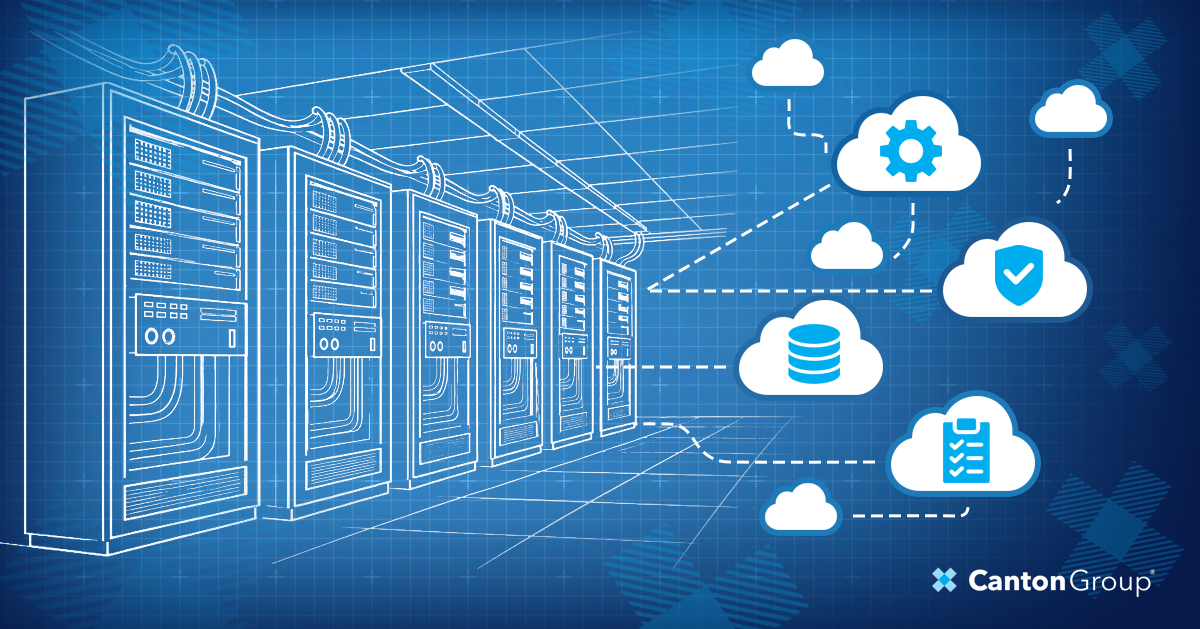
The options include agency-managed infrastructure, a cloud environment the agency controls, a commercial cloud service, or a shared service. Each carries different compliance responsibilities. Federal agencies are generally expected to use FedRAMP-certified cloud services for federal data, and state and local agencies may look to GovRAMP or their own state requirements. Security in the cloud is also shared: the provider secures its part, but the agency remains responsible for its configuration, its data, and who can access it. We go deeper on this in Cloud Adoption for Government: Benefits, Challenges, and Considerations.
Can modernization improve compliance?
Yes, and agencies expect it to. In the GAO review, Defense Department officials listed mitigated compliance and cybersecurity risks among the benefits of modernizing a 1960s-era contract system. Energy officials said modernizing a payroll-related system would strengthen the department's cybersecurity posture. Commerce officials said its modernization program would enable Zero Trust implementation.
In practical terms, the gains tend to come from things legacy platforms struggle with: multi-factor authentication, stronger encryption, centralized logging, easier patching, and evidence that can be gathered continuously rather than assembled before every audit. None of that happens automatically. It must be designed in and verified.
How do you build compliance into a modernization plan?
Categorize the system and its data early. The risk level you assign drives which controls apply and how much assessment is needed.
Bring security and the authorizing official in from the start. Agree up front on which changes will trigger review and what evidence will be expected.
Map today's controls to tomorrow's design. Know which controls carry over, which are inherited from a platform or provider, which are new, and which can be retired.
Plan for the in-between state. Document the hybrid architecture and the connections between old and new systems at each phase.
Collect evidence as you go. Keep logs, access records, and test results organized throughout the project, so the assessment isn't a scramble at the end.
Plan the legacy system's disposition. That includes records retention requirements, archiving what must be kept, and securely sanitizing what shouldn't be, before the old system is switched off. This is the "disposition" element GAO says every modernization plan should include.
Where does AI fit from a compliance standpoint?
Using AI tools in modernization raises its own questions: where does the code and data go, who approves changes, and can you prove it later? Our approach is built around those questions. Our AI-assisted services run as containerized endpoints inside the client's own Azure or AWS environment, under the client's identity model and audit controls, so code and data don't have to leave it. Every AI-generated change needs a named human approver, and every handoff between an agent and an engineer is recorded in a log that can't be edited afterward. We explain how that works in AI-Driven Legacy Modernization: The Discipline Behind the Orchestration.
What should leaders ask a modernization partner about compliance?
- How will you work with our security team and authorizing official, and at what points?
- How will our authorization be affected at each phase, and who updates the documentation?
- Where will the work run, and where will our code and data live while it does?
- How do you keep audit logs and access controls continuous during cutover?
- How do you stay current on changing requirements like FedRAMP's 2026 updates?
- How will the legacy system's data be retained, archived, or destroyed at the end?
At The Canton Group, we've worked with government and enterprise clients on sensitive systems since 1998, and we're a SOC 2 Type 2 certified business. We've built a state-certified elections management system, and we architected a secure AWS data lake for protected health data at the Baltimore City Health Department. Those weren't mainframe migrations, but the compliance discipline is the same: understand the requirements first, build them in, and be able to show your work. Our in-house team tailors that approach to each agency's environment, because no two compliance situations are identical.
Frequently Asked Questions
Does modernizing a mainframe require a new ATO?
It depends on the scope of the change and the judgment of the agency's authorizing official. Replacing or significantly changing a system generally prompts a review of its authorization, so it's best to agree on the approach early.
What is an authorization to operate (ATO)?
It's a risk-based decision, made by a senior agency official, that a system may operate. It's one of the final steps of NIST's Risk Management Framework.
Do federal agencies have to use FedRAMP for cloud services?
Federal agencies are generally expected to use FedRAMP-certified cloud services for federal data. Confirm the specifics for your situation with your authorizing official and your agency's policies.
GovRAMP, formerly StateRAMP, is a nonprofit program that standardizes cloud security verification for state, local, tribal, and education governments.
Yes. FedRAMP is consolidating its rules, now uses "certification" as its official label, and has introduced classes A through D. Check fedramp.gov for the latest requirements.
Can a legacy system be compliant while it's waiting to be modernized?
Often, yes, with compensating controls and documented risk decisions. But GAO notes that some vulnerabilities can't be fully remediated without modernization, which is one reason compliance is a driver for the work.
How do you stay compliant during a phased modernization?
Plan for the hybrid state: document how old and new systems connect, keep audit logging and access controls continuous, and keep your authorizing official informed at each phase.
Planning a modernization and want to get compliance right from the start? Contact The Canton Group. We're happy to talk through your requirements and what a compliant plan could look like.